

Digital engineering for physical AI
Building Better Realities.
Mirror Factory is a digital engineering company building autonomous services that adapt to people and the world around them.
What we believe
Technology should adapt to people.
Who we are
A firm of engineers who build for clients.
Mirror Factory is a digital engineering firm in downtown Orlando. We make machines, systems and the people who run them work together, from the firmware to the front end.
We mean engineering in its rigorous sense: physics, electronics and components, as well as software. Companies rarely replace their machines, so we connect the ones people already trust to the systems they are building next.
Digital engineering
Building better realities.
From the weld to the control room to the city around it, we connect the physical world to the systems that run it.
Start a conversationWhere we are looking
Where the hard problems are.
Large physical operations where machines, people and plans have to stay in step. We start close to home, in Orlando.
Our practice
Systems, strategy and storytelling.
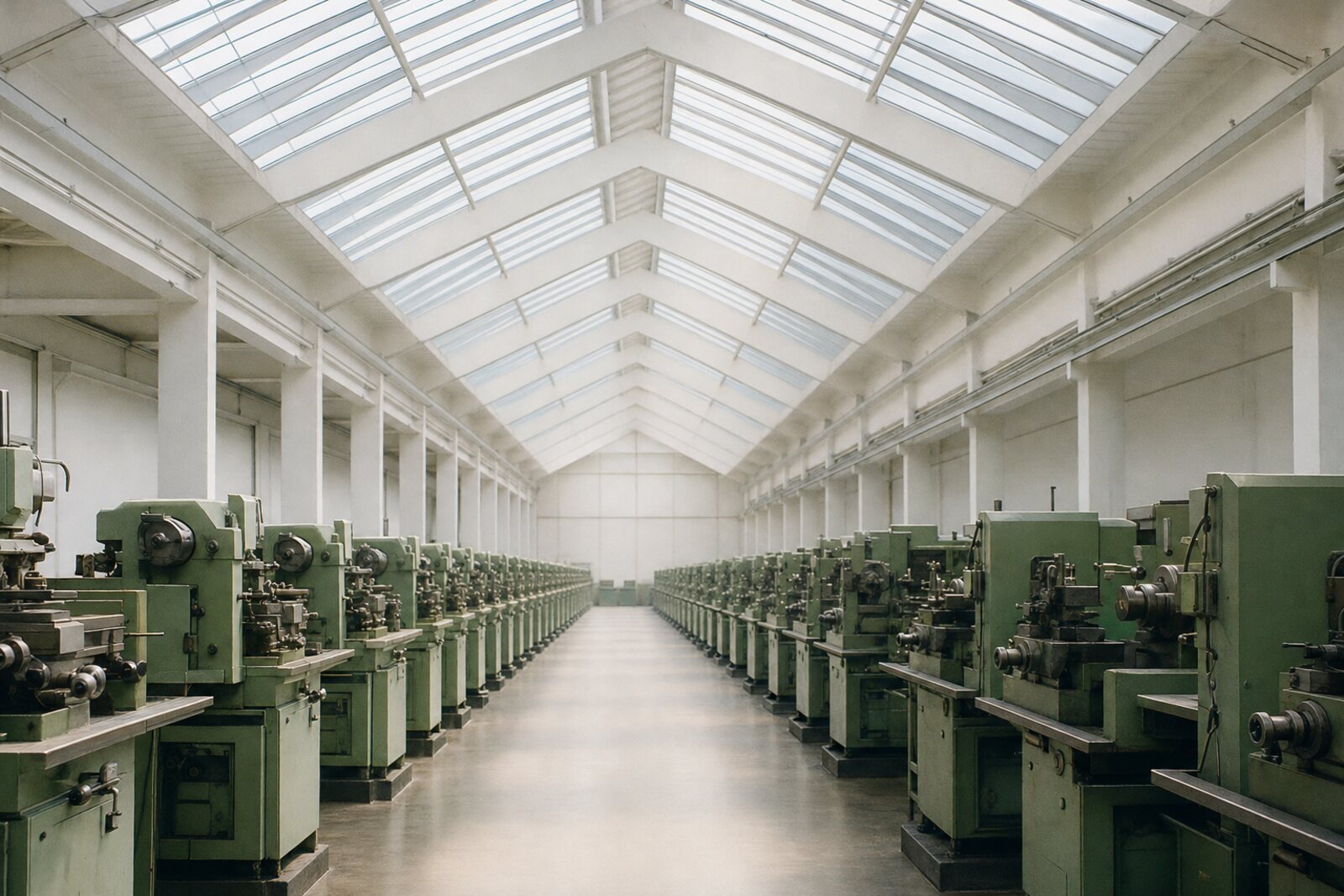
Systems
High-value client work, firmware to front end. We engineer it, test it in real conditions and hand it over.
- Connected machines
- Software and interfaces
- Field testing

Strategy
We find where the work, the plan and the goal have drifted, then plan the next step with you. Layers is the planner we are developing for it.
- Current-state study
- A plan that adapts
- Clear decisions

Storytelling
The storytelling service we are building. Talk through a brand, and a campaign keeps going, with people in the loop.
- Brand context
- Campaign system
- People in the loop
Questions
Before we talk.
Mirror Factory is a digital engineering company building autonomous services that adapt to people and the world around them. We are a firm of engineers in Orlando, Florida, and we build for clients.
Engineering in its rigorous sense: physics, electronics, firmware and software. We make machines, systems and the people who run them work together, and keep them aligned as the world changes.
Drift is the gap that opens between systems that should agree. Two systems, two clocks. Offline, they drift apart. Resync them badly and you get bad data and malformed logs. The same pattern shows up in rooms, in robots and in plans. We build tools for alignment that keep them connected, and a person decides what changes.
Plans drift too. When the work pulls away from the goal, a person decides what changes: the work, the plan or the goal. Adaptive planning means building systems that replan, recoordinate and adapt around that decision. Layers is the planner we are developing for it.
Yes. Companies rarely replace their machines. They will replace the firmware. Most of our projects have had a hardware component we worked with down to the operating system or firmware.
We do not manufacture robots. We make intelligent machines work inside the places and products that already exist: the firmware, software, sensing and planning around them.
Large physical operations where machines, people and plans have to stay in step: attractions and entertainment, hospitality and resorts, manufacturing, robotics and logistics. We start close to home, in Orlando.
AI is one part of a working system, next to the machines, the software and the people who run them. We use language and vision models and agents that act with human approval, and we evaluate and trace what they do.
In real conditions. Physics does not negotiate, and a model that agrees with itself is not calibration. We measure the real machine and bring the model in line with it.
That is the aim. We build systems people can inspect, question and run themselves. The pattern is to do the work, make it repeatable and hand it over, then take on a harder problem.
Brand Studio is a storytelling service we are building. An invited brand-report alpha exists; the persistent campaign service remains in development, with people in the loop.
Start a conversation. Tell us what you are building, where it has drifted and where the work gets hard. Your note goes straight to the three co-founders, and a founder will reply.
Let’s build a better reality together.
Bring us a complex question. A founder will reply.
Start a conversation